

Author’s Note
We return now to Haiti in 1985, in the final months of the Duvalier regime.
Only hours have passed since the abduction of Nadège Guillaume. What began as a family tragedy is already spreading beyond the walls of the Guillaume household — carried by the one medium that reaches every corner of the country.
In Haiti, when something enters the airwaves, it rarely stays small.
When the news of Nadège’s abduction broke, it sent a tremor through every radio station in Haiti.
In a country where most households didn’t own — or couldn’t dream of affording — a television set, radio was king. More than king: radio was woven into the nation’s cultural fabric in an intimate, almost sacred way.
Where American children grew up on Saturday morning cartoons, Haitian kids grew up on Les Aventures de Tarzan et Jeanne on Radio Lumière. Sunday mornings belonged to the sentimental rancheras on Radio Cacique, hosted by Elkin — the blind DJ with the velvet voice.
And throughout the week, the airwaves pulsed with the country’s heartbeat: Radio Métropole for crisp news, Radio Lumière for scripture and refuge, Radio Nationale if you had the stomach for the regime’s propaganda, or Radio Soleil if you preferred your truth militant, unfiltered, and aflame.
Radio was the country’s lifeline — the nervous system of its resistance.
Some stations whispered rebellion, others shouted it, but all of them carried the stories of a nation suffocating under a stagnant dictatorship led by a small, frightened man named Jean-Claude Duvalier.
And now the airwaves carried something else.
The voice of the announcer confirmed that a young journalist, Nadège Guillaume, had vanished in broad daylight.
Her name now existed in the country’s bloodstream.
Her disappearance was no longer a family tragedy.
It had become a national wound.
The Ripple Effect
Without being planned, without being plotted, something shifted in the Haitian radio landscape.
Stations no longer seemed interested in offering the comforting illusions that helped people forget they were living under a suffocating regime.
Instead, the airwaves began to sound like the country itself.
Forbidden songs returned.
Radio Soleil dusted off Manno Charlemagne’s fiercest anti-regime anthems.
Radio Cacique revived the sharpest monologues of Maurice Sixto.
And on Radio Métropole, a song by Yole and Ansy DeRose drifted across the city with lyrics that sounded almost like a confession:
“Si Bon Dye ba’n la pawòl, se pou nou ka pale tout sa’n vle di, tout sa’n dwe di.”
(If God gave us speech, it is so we can say all we need to say — all we must say.)
The Ripple Effect
The country’s mood was changing.
The regime could feel it.
Gunfire cracked across Port-au-Prince that Sunday evening — sudden bursts echoing through ravines, ricocheting off tin roofs.
It was the Tonton Macoutes’ favorite form of public messaging.
A warning delivered in gunpowder:
Don’t even think of taking to the streets.
But young people born under a dictatorship develop a strange instinct.
They grow up bathing in fear until fear itself begins to lose meaning.
And when they finally decide they’ve had enough, they have nothing left to lose.
Under a long dictatorship, life itself becomes the “nothing” they have left to lose.
The Ripple Effect
That same night marked the closing of the annual Revèy, a week-long evangelical revival that drew believers from every corner of Port-au-Prince.
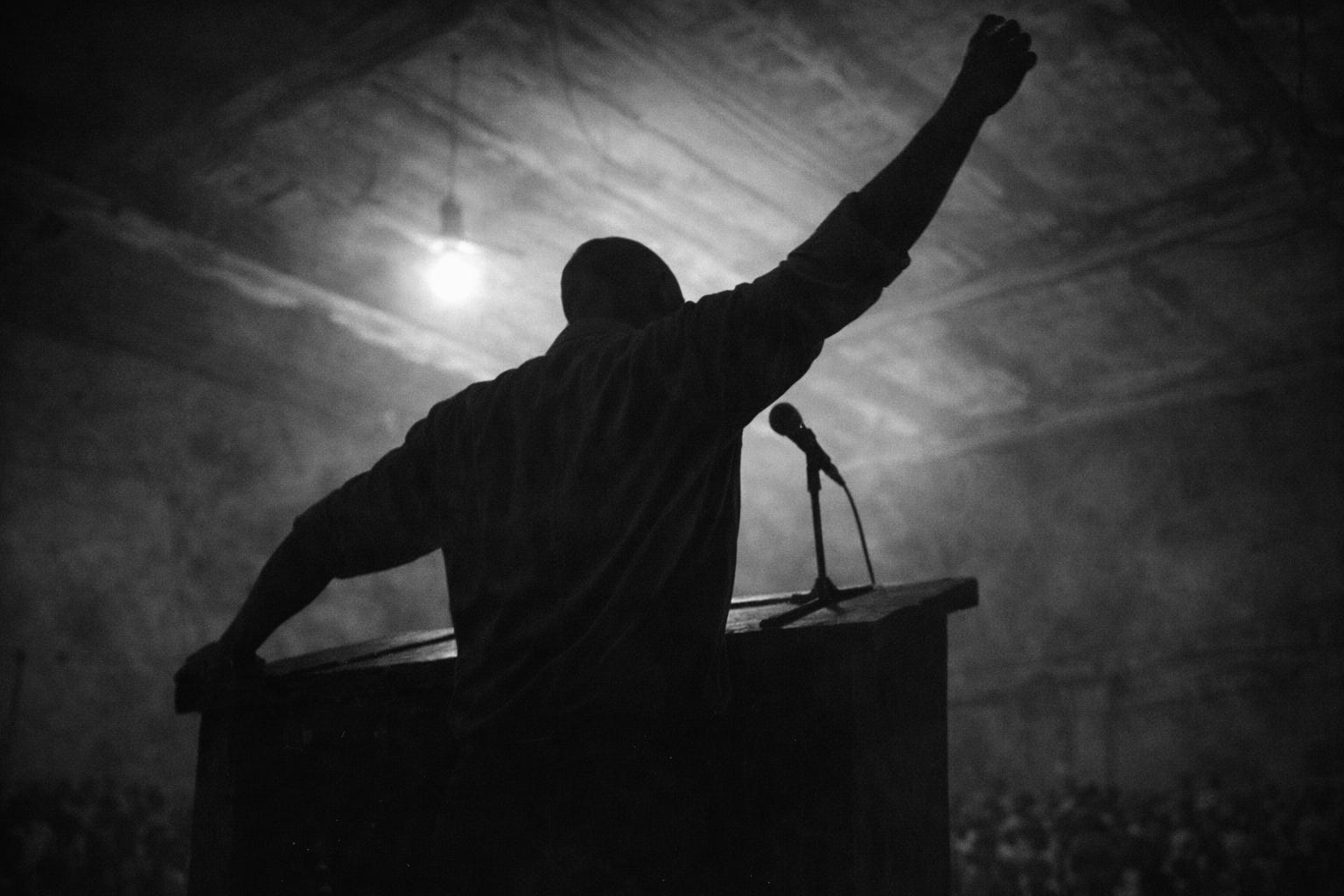
Delivering the final sermon was Jean-Baptiste Arnaud, a thirty-two-year-old preacher whose rise had quietly become the talk of Haiti’s evangelical circles.
But Arnaud had not come to preach comfort.
What poured out of him was something far more dangerous.
His voice filled the auditorium with a rebuke of Duvalierism that few religious leaders had dared speak aloud.
Then he said the words that changed the room.
“Ban nou Nadège… oswa touye nou tout.”
(Give us Nadège… or kill us all.)
The Ripple Effect
The congregation gasped — not from shock, but from recognition.
Someone had finally spoken aloud what the country had been whispering for years.
Arnaud’s voice rose with righteous fury:
“Pèp Bondye a pa nan kapon.”
(God’s people are not cowards.)
“Bondye rele nou pou nou pale laverite.”
(God calls us to speak the truth.)
Then he thundered one final challenge:
“Jodi a nou di Leta, o non de Jezi… ASE!”
(Today we say to the State, in the name of Jesus… ENOUGH!)
And finally:
“W’ap ban nou Nadège Guillaume… oswa pare pou nou touye nou tout!”
(You will give us Nadège Guillaume… or be prepared to kill us all!)
The Ripple Effect
The auditorium erupted.
Not with quiet worship.
With something louder.
Something political.
Something dangerous.
The choir rose and began a hymn whose words suddenly sounded less like prayer and more like prophecy:
“Nou pa janm pè pou la vi nou nan Jezu.”
(We never fear for our lives, for we walk in Christ.)
The walls trembled with it.
Haiti trembled with it.
Closing Reflection
A name had traveled across the airwaves.
A sermon had turned into a challenge.
And somewhere in Port-au-Prince, men who had grown comfortable ruling through fear were beginning to understand something dangerous:
The country was no longer whispering.
Stay tuned.